Showing posts with label World News. Show all posts

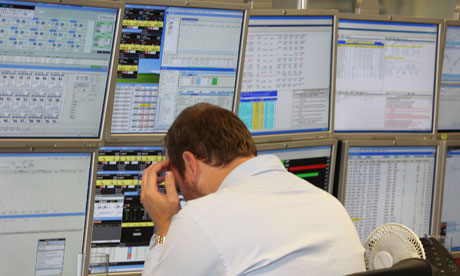
Japan stocks fall for seventh day amid global sell-off

Japanese stocks fell for the seventh straight session as fresh fears over the health of the world economy sparked a global sell-off.
The Nikkei 225 index shed 0.8%. Elsewhere, Hong Kong's Hang Seng and Australia's ASX 200 also dropped 1%.
Worries over the eurozone debt crisis and the US economic recovery losing its steam hit shares of exporters.
Sony fell 5%, a day after after it doubled its forecast of an annual loss to $6.4bn (£4bn).
"Japan's consumer electronics industry is facing defeat," said Fujio Ando, senior managing director of Chibagin Asset Management.
"I don't think there is any guarantee that we will see the company return to black this year." he said.
'Carbon copy'

Start Quote

2012 is at risk of being a carbon copy of 2011, where equity markets began the year with a spring in their step before sentiment turned very bearish as the European sovereign debt crisis spiralled out of control”
Angus Campbell Capital Spreads
One of the biggest fears among the global investors has been that the eurozone debt crisis, which has hurt growth countries such as Greece, may spread to the region's bigger economies.
Those fears were fanned further on Tuesday after the interest rate on Spanish bonds traded in the secondary market rose further.
The yield on 10-year bonds hit 5.99%, up from 5.74% on Monday, indicating that investors are getting increasingly concerned about Spain's ability to repay its debts.
The fear is that if the crisis in Spain, which makes up about 11% of the total output of the 17 countries that use the euro, is not managed properly, it will have a negative impact on the region's growth and also hurt the global economic recovery.
On Tuesday, France's Cac 40 fell 3.1%, the UK's FTSE 100 and Germany's Dax lost about 2.5%.
Analysts warned that markets may fall even further amid a dip in investor morale.
"2012 is at risk of being a carbon copy of 2011, where equity markets began the year with a spring in their step before sentiment turned very bearish as the European sovereign debt crisis spiralled out of control", said Angus Campbell of Capital Spreads.
At the same time, a weaker-than-expected jobs data from the US has raised concerns about the recovery in the world's biggest economy.
Philippe Gijsels, head of research at BNP Paribas Fortis Global Markets, said the combination of these factors was prompting investors to take a cautious approach.
"Investors are in a risk-off mode, with the US job numbers and the situation around Spain becoming an excuse for the sell-off."
'Wild card'
Adding to investors concerns have been fears about a slowdown in China, the world's second-largest economy, and one of the main drivers of global growth in recent years.
China's export sector is one of the biggest contributors to its economic expansion. However, a slowdown in its key markets such as the US and eurozone has raised fears that Beijing may not be able to maintain its high pace of growth.
Analysts said that investors were being cautious ahead of China's growth data, which is scheduled to be released later this week.
"How much is China going to slow down, that is the big wild card," Hans Goetti, chief investment officer of Finaport told the BBC. "The first quarter growth could be even less than 7.5%."
Chinese premier Wen Jiabao has set a growth target of 7.5%, the lowest since 2004.

Bomb threat diverts Korean plane to Canadian army base

Korean Air Boeing 777 parked on the runway of a Canadian Forces base in Comox, British Columbia after an emergency landing on Tuesday April 10, 2012  
The Korean Air Boeing 777 was forced to land at a Canadian military base
A Korean Airlines plane has diverted to a Canadian military base on Vancouver Island after it received a tip-off about a bomb threat.
The Boeing 777 was en route from Vancouver to Seoul when the airline's Los Angeles call centre received a call about a bomb on board.
Two United States fighter jets were apparently scrambled in response, the Associated Press reported.
A Korean Air spokesman said it was too early to tell if the call was a hoax.
James Koh said all 149 passengers were safely off the plane at the military base on the east coast of Vancouver Island.
Canadian security services are now inspecting the plane to investigate the threat.
Mr Koh added that Korean Air had received a similar call on Monday afternoon that caused another flight from Vancouver to be delayed for two hours before the all clear was given.
[BBC]

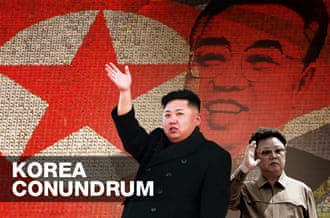
North Korea starts to fuel rocket

North Korea says it has begun fuelling a rocket ahead of a planned launch expected later this week which it says will put a satellite into space.
Paek Chang-ho, head of the satellite control centre of the Korean Committee of Space Technology, announced the latest preparations, as the US and Japan called on Pyongyang not to go ahead with the launch.
"We are injecting fuel as we speak. It has started," Paek told visiting foreign journalists outside the capital, Pyongyang. "And as for the exact timing of the launch, it will be decided by my superior."
But Hillary Clinton, the US secretary of state, urged North Korea not to go ahead with a planned rocket launch if it wanted a "peaceful, better future" for its people.
"We are consulting closely in capitals and at the United Nations in New York and we will be pursuing appropriate action," Clinton said at a press conference on Tuesday with Koichiro Gemba, Japan's foreign minister, who echoed her remarks.
"If North Korea wants a peaceful, better future for their people, it should not conduct another launch that would be a direct threat to regional security," the chief US diplomat said.
Gemba spoke of US-Japanese co-operation if North Korea goes ahead with the launch of a rocket, which critics say amounts to a disguised missile test by the reclusive nuclear-armed state.
"The United States and Japan would co-operate with each other and the international community, including the Security Council, would take an appropriate measure," Gemba said.
Neither Clinton nor Gemba explained what they meant by "appropriate" action.
Spotlight coverage of tension in Northeast Asia
South Korea has already threatened to deliver a "firm response" to "provocation" if the North does goes ahead with its planned launch.
Japan has also braced itself for the launch, having put missile batteries on alert to shoot the rocket down if it passes through Japanese airspace.
The Unha-3 rocket is expected to fly past western Japan, raising concerns that a failed launch, or a falling stage of the rocket, could endanger Japanese lives or property.
"They have come pretty far on the question of range, but they still need a lot to resolve in the precision technology needed for [warhead] re-entry and guidance," a South Korean military official who spoke on condition of anonymity, told the Reuters news agency.
The Unha-3 is believed to be the same three-stage liquid-fuelled ballistic missile the North fired in 2009 over Japan, which eventually splashed down after a 3,800km flight, military experts in South Korea said.

The new rocket is believed to have a design range of more than 6,700 kilometres, and can carry a payload of up to 1,000 kg.
The planned launch has already prompted three Asian airlines to make changes to flight paths to avoid the missile.
Philippine Airlines, Japan Airlines (JAL) and All Nippon Airways (ANA) have announced changes to several routes.
Philippine Airlines said in a statement that as the splashdown area of the rocket's second stage was anticipated to be ''just east of Luzon'', all flights passing through the area during the launch period would have their routes adjusted.
These include about a dozen flights between Manila and the US, Canada, Japan and South Korea.
Philippine officials have also declared a no-fly zone and warned ships and fishing boats to avoid the area where rocket debris could fall.
Source:
Al Jazeera and agencies

Chloe Green's new shoe collection makes me despair

Once, we thought high-street collections 'designed' by celebrities were naff. Now a CEO's daughter is getting in on the act

Chloe Green
Chloe Green is to launch her first shoe collection. Photograph: Richard Young/Rex Features

So far the fashions this year have been pretty good! Ladylike pastels, heels getting lower, It bags going the way of harem trousers. Is the fashion world becoming sensible?
Melanie, London

Ah, Melanie. Come here, you sweetly optimistic if naive young thing. Come here and let me shatter your innocent peace of mind, like a Cassandra figure in a horror movie who points out to the heroine that, actually, the psychopathic killer hasn't been destroyed at all but is actually standing right behind her, scythe raised and ready to fall. For I must whisper three words in your ears: Chloe Green Shoes. Oh dear God!
Chloe Green, for those who have not had the pleasure of making the acquaintance of this precocious young lady in the tabloids or on reality TV shows, is the daughter of Philip Green, overlord of swaths of this country's high streets and best mate of Gwyneth Paltrow, Leo DiCaprio and Kate Moss, all of whom would still adore "Uncle Phil" even if he weren't the ninth richest man in Great Britain. It's his famously appealing personality they enjoy, you know, not his private jet.
I must take caution when writing about this charming chap, as he has form in making his displeasure very known to this newspaper when something appears in it that is not a press release about how great he is. I myself have felt the sharp edge of his displeasure when I was sent summarily out of his office by the man himself with the words "antisemitic newspaper" ringing in my ears. Not even my protestation that both my editor and myself are, in fact, chosen people, assuaged his ire.
Anyway, Sir Phil is not our subject today (thank the Old Testament God) – 'tis his daughter Chloe. Raised on the mean streets of Monaco and with nothing to keep her entertained other than Daddy's £7m plane and £20m yacht.
Like many before her, Chloe dabbled in reality TV so that people could, as she said, "see the real me". Truly, there is no better way to prove how down-to-earth one is than showing off one's tongue piercing on Made in Chelsea.
In a turn of events absolutely no one could have predicted, Chloe is now branching out into shoe design, presumably having opted against DJing and lingerie manufacturing, the usual pastimes of the young, moneyed and untrained. To be fair to Chloe, with regard to training, she professes to own more than 70 pairs of Christian Louboutin shoes, which is, really, the same as a PhD in cordwainery from the London College of Fashion. As yet, only one photo of Chloe's wares has been released and it is, I can reveal, an open-toed silver ankle boot, and is about 8in high, so the perfect shoe if you're a young ex-reality TV star who only needs to walk from chauffeured car to private jet. It also has green soles, which I'm assuming is some reference to her middle name "Jade" and is absolutely not a rip-off of the red-soled schtick perfected by Louboutin. According to the last reports, Chloe had six in-house buyers and designers and an unspecified budget from her dad, the CEO of Topshop, to help get this venture off the ground.
"She hopes," one newspaper reported without a hint of sarcasm, "to sell the line at Topshop." Chloe, darling, I don't think you need to lose any sleep over that concern.
Now, I have no problem with wealthy children of celebrities working. Heck, better them doing that than being Peaches Geldof. Until the day she dies, Stella McCartney will have to endure accusations that her success is due to the proceeds of Abbey Road and her father's front-row presence. In fact, McCartney is a very good designer and the fact that she chose a career that has nothing to do with her parents is precisely what separates her from, say, the Sean Lennons of this world.
Maybe Chloe will turn out to be the next Manolo Blahnik. For her sake, I hope so. But when someone is apparently unaware that their heavy reliance on their parents' connections and money in order to achieve their career ambitions will always raise questions about their true merit, it does make me question their judgment in other areas.
Once high-street collections "designed" by celebrities seemed the epitome of naffness. Now we've got collections designed by CEO's kids. It's enough to make you sentimental for Lily Allen for New Look, ain't it?
Post your questions to Ask Hadley, The Guardian, Kings Place, 90 York Way, London N1 9GU. Email ask.hadley@guardian.co.uk

Retail sector boosted by warm weather

British Retail Consortium survey finds high-street spending rose 3.6% in March but says overall retail environment is 'difficult'
UK retail sales
The clothing sector and non-food generally benefited from the warm March weather. But consumers’ incomes are still squeezed. Photograph: Alamy

Warm days in March gave British men the shopping bug, boosting high-street spending, according to the British Retail Consortium's monthly health check.
While women seemed wary of parting with cash, shops selling clothes, footwear and outdoor leisurewear noted an increase in activity that contributed to a rise in sales of 3.6% compared with March 2011.
The British Retail Consortium said the year-on-year rise was more modest once the expansion in floor space over the past year was taken into account. It was cautious about reading too much into the figures for one month.
The industry body said its monthly survey, with KPMG, showed like-for-like sales were up by 1.3%, though consumers were still cautious about spending on big-ticket items.
Stephen Robertson, the BRC's director general, said: "The unusually warm weather in March brought some welcome sunshine into the lives of non-food retailers. The early signs of summer got people buying clothes and shoes for the new season. Gardening items and outdoor leisure also saw a lift."
Although the retail sector hopes the Queen's diamond jubilee and the 2012 Olympics will encourage spending, Robertson described the overall retail environment as difficult.
He added: "Discounting remains a key tactic for retailers trying to encourage consumers to spend, particularly on big indoor items. People are still struggling to balance household budgets against expensive fuel and utilities. It will take more than a week of sunshine to transform retailers' fortunes."
Food sales were unchanged last month on a year earlier, and Robertson said turnover growth in the sector was largely underpinned by the rising cost of food rather than by customers buying more.
Helen Dickinson, KPMG's head of retail, said: "The clothing sector as a whole and non-food generally benefited from the warm March weather. But, as consumers' incomes continue to be squeezed, it's female shoppers who are tightening their purse strings most severely, focusing more on lower-price items to control the household budget. This buying behaviour saw women's clothing perform less strongly than men's and children's wear. Home accessories and textiles also had a poor month."

Abu Hamza can be extradited to US, human rights court rules

Abu Hamza

European court of human rights says the radical cleric can be extradited to the US to face terrorism charges Link to this video Abu Hamza, the radical cleric who became the face of violent extremism in Britain, can be extradited to the US to face terrorism charges, the European court of human rights has ruled.
The court in Strasbourg said the human rights of Hamza and four other men held in Britain – Babar Ahmad, Syed Talha Ahsan, Adel Abdel Bary and Khaled al-Fawwaz – would not be violated if sent to the US to stand trial. European judges decided they needed more information about the mental health of Haroon Aswat, an aide to Hamza, before reaching a decision on him.
The ruling clears the last realistic obstacle to Hamza's extradition.
The men have the right to appeal to the grand chamber of the European court and have three months to make an application.
Babar Ahmad's sister said they would appeal the ruling. An appeal has only a slim chance of success, but it could delay extradition for months.
Nazia Ahmad, 27, told the Guardian: "I think we will be taking that avenue." She said the family, from Tooting, south London, would fight on. "We're very disappointed, we're going to carry on fighting for Babar," she said.
Ahmad said her brother should be prosecuted in the UK, and claimed the Crown Prosecution Service had not considered significant parts of the evidence against him, when it decided he should not face charges in Britain.
She said: "His case should have been dealt with by the authorities in the UK. They gathered the evidence, they gave it to the US, and they should have looked at it and decided if he should be put on trial in the UK."
Ahmad said her brother's case represented a "serious abuse of process". She called for a public inquiry and for ministers to answer her famiy's questions.
David Cameron welcomed the court's ruling. Speaking during a trade mission to south-east Asia, he said: "I am very pleased with the news. It is quite right that we have proper legal processes, although sometimes one can get frustrated with how long they take."
The home secretary, Theresa May, said the government "will work to ensure that the suspects are handed over to the US authorities as quickly as possible".
Hamza, who controlled the Finsbury Park mosque in north London and turned it into a factory for violent jihad, was sentenced to seven years' imprisonment in Britain after being convicted in 2006 of inciting hatred.
The previous government had wanted him sent to the US before his jail term had been completed, but the extradition was halted after his lawyers went to the European court.
The European court of human rights halted extradition proceedings in July 2010, arguing it needed more time to consider complaints that transferring Hamza and others wanted in the US risked breaching their rights by exposing them to possible life imprisonment without parole and solitary confinement.
Ahmad, who the US claims ran a website allegedly raising funds for Islamic extremists, is a computer expert from south London. He has been on remand and refused bail since his arrest in August 2004 on a US extradition warrant.
He was awarded £60,000 in compensation because of the violence British police used during his arrest in December 2003, during which he was punched, kicked and throttled. His case has been supported by the former transport minister Sadiq Khan, who is a family friend and Labour frontbencher.
In the Hamza case, the US has had to given written assurances that it will not impose the death penalty or place the suspects before Guantánamo Bay-style military tribunals.
The US alleges Hamza was in contact with Taliban and al-Qaida terrorists and aided the taking of 16 western tourists as hostages in Yemen in December 1998, an incident that ended in the deaths of three Britons. He is also charged with attempting to set up a training camp for "violent jihad" in Oregon in 1999, along with Aswat.
The court in Strasbourg had considered the cases of the four men for over four years.
In a press release, the court said: "The European court of human rights held, unanimously, that there would be: no violation of article three (prohibition of inhuman and degrading treatment) of the European convention on human rights as a result of conditions of detention at ADX Florence (a "supermax" prison in the US) – if Mr Ahmad, Mr Ahsan, Mr Abu Hamza, Mr Bary and Mr Al-Fawwaz were extradited to the USA; and, no violation of article three of the convention as a result of the length of their possible sentences if Mr Ahmad, Mr Ahsan, Abu Hamza, Mr Bary and Mr Al-Fawwaz were extradited."
The court said it wanted more information on Aswat before reaching a judgment: "The court adjourned its examination of Mr Aswat's application as it required further submissions from the parties, on the relevance of his schizophrenia and detention at Broadmoor hospital to his complaint concerning detention at ADX."

European stock markets rocked by panic selling as debt crisis reignites

Investors demanding high premiums for holding Italian and Spanish bonds as fears of double-dip recession grow

Eurozone crisis
Stock market panic selling led to shares falling across the world with the FTSE100 down 128 points. Photograph: Frank Baron for the Guardian

Europe's sovereign debt crisis exploded back into life on Tuesday, with markets across the continent rocked by a wave of panic selling amid renewed fears about the impact of savage austerity measures in Spain and Italy.
The mood of uneasy calm seen across Europe since the Greek bailout in February was shattered as financial markets took fright at evidence of a double-dip recession and growing popular opposition to welfare cuts and tax increases.
Italy and Spain, the eurozone's third and fourth biggest economies, were at the centre of the market turmoil, with investors demanding an increasingly high premium for holding their bonds.
"Spain is right in the centre of a European storm," admitted finance minister Luis de Guindos, who declined to rule out an eventual bailout but insisted it could be avoided.
In Italy, Mario Monti's coalition government is facing growing hostility to reforms of its labour market, while the sheer size of the country's public debt made it an obvious target for nervous traders. The prospect of Greek voters rejecting austerity and the French electorate denying Nicolas Sarkozy a second term as president was also weighing on the markets.
The Greek government said it would hold a general election on 6 May, with opinion polls showing support for the mainstream pro-austerity parties is too weak to allow them to form a government.
"Spain is a big focus right now and even Greece will be coming back into the picture as it looks for another tranche of aid, so this eurozone debt tragedy is not going away, but seems to be getting worse," said Daniel Hwang, senior currency strategist at Forex.com in New York.
Interest rates on 10-year Spanish bonds hit 6% for the first time since January, when Europe's leaders were battling to agree a bailout deal for Greece and secure the future of the eurozone. Shares in Madrid dropped by almost 3% to hit their lowest level since March 2009.
In Italy, share prices slumped by 5% on rumours that the government was preparing to downgrade its growth forecasts, and trading in the shares of several of its banks was suspended after they fell sharply.
Shares were also much lower on Wall Street, where the fallout from Europe exacerbated fears that the US recovery is petering out. Disappointment at last week's unemployment figures had already been weighing heavily on investor confidence.
The markets closed in New York with Wall Street completing a fifth successive day of decline, with the Dow Jones having lost 213 points. In London, the FTSE 100 closed down 128 points, at 5,595.55. Oil prices also fell sharply amid concerns about the prospects for growth on both sides of the Atlantic and in Asia, with the price of a barrel of crude falling by more than $2.
In contrast, safe haven assets such as gold, the US dollar and bonds in the US, Germany and Britain were all in demand. "The market went up on a wave of liquidity-induced euphoria, and as usual overshot. Now the clever boys have decided to get out," said Charles Dumas of Lombard Street Research.
Europe's politicians had hoped that Greece's second bailout, and a battery of emergency measures unleashed by the European Central Bank, including its long-term "repo" operation, which offered cheap money to troubled banks, would draw a line under months of economic chaos. But Erik Britton, of City consultancy Fathom, said: "The LTRO [long term refinancing operation] and all those things, all it's done is bought a bit of time, but it hasn't addressed the structural problems, even slightly, even for Greece."
He predicted that the ECB could be forced to take fresh rescue measures in the next few weeks to prevent strains in Europe's banking sector from turning into a credit crunch, while in the longer term several more countries – including Spain and Italy – would eventually be forced to write off a proportion of their debts before the crisis is over.
The euro came under pressure on the foreign exchange markets as the mood darkened on Tuesday, losing 0.2% against the dollar, to $1.3080, and more than 1% against the yen. David Song, Currency Analyst at DailyFX, said: "The single currency is likely to face additional headwinds over the near term as the region continues to face a risk for a prolonged recession."
Spain's prime minister, Mariano Rajoy, speaking in the country's senate, warned that his government must stick with its austerity plans, saying: "There's no doubt that much of Spain's future is at stake and also economic growth and the creation of jobs over the coming years."
But the central bank governor, Miguel Ángel Fernández Ordóñez, added to the mood of anxiety by warning that unless the economy improves, the country's struggling banks will need a new government bailout. Successive waves of austerity measures have already driven Spanish unemployment to 23%. Some 50% of young people are out of work.
Jane Foley, currency strategist at Rabobank, said: "The Spanish government appears to be losing the battle to restore budgetary credibility while each additional austerity measure serves to feed the recessionary backdrop."
In London, Barclays shares fell by 6% to 206p and were the second-biggest faller in the FTSE100 amid fears about its troubled Spanish operation. In February Barclays borrowed €6bn from the ECB's cheap loans scheme to pour into its Spanish operations.
The fresh bout of turbulence comes as the world's finance ministers and central bank governors prepare to fly to Washington next week for the half-yearly meeting of the International Monetary Fund. Following the measures taken by the ECB, the fund had been hopeful that the talks would be less fraught than those last autumn, when Europe's leaders were told to get to grips with their problems.
Christine Lagarde, the IMF's managing director, will almost certainly use the renewed crisis in the single currency zone to seek support for an increase in the fund's resources. But several countries, including the UK, have signalled that they would be reluctant to contribute significant new funds to the IMF unless they can be convinced eurozone leaders have done everything possible to tackle sovereign debt.

Saudi princess: What I'd change about my country

Saudi women waiting for their drivers outside a mall in Riyadh
 
Princess Basma Bint Saud Bin Abdulaziz tells the BBC there are many changes she would like to see in Saudi Arabia - but that now is not the time for women to be allowed to drive. 

I speak as the daughter of King Saud, the former ruler of Saudi Arabia. My father established the first women's university in the kingdom, abolished slavery and tried to establish a constitutional monarchy that separates the position of king from that of prime minister. But I am saddened to say that my beloved country today has not fulfilled that early promise.
Our ancient culture, of which I am very proud, is renowned for its nobility and generosity, but we lack, and urgently need, fundamental civil laws with which to govern our society.
As a daughter, sister, (former) wife, mother, businesswoman and a working journalist, these are the things that I would like to see changed in Saudi Arabia.

1. Constitution

Princess Basma Princess Basma is divorced and lives with her children in London
I would like to see a proper constitution that treats all men and women on an equal footing before the law but that also serves as a guide to our civil laws and political culture.
For example, today in Saudi courts, all decisions are made according to the individual judge's interpretation of the holy Koran. This is entirely dependent on his own personal beliefs and upbringing rather than universally agreed principles or a written constitution as a guide.
I am not calling for a western system but an adaptation of that system to suit our needs and culture. Thus our constitution should be inspired by the philosophy of the Koran with principles that are set in stone and not open to the whims of individual judges as is the case now.
In particular, the constitution should protect every citizen's basic human rights regardless of their sex, status or sect. Everyone should be equal before the law.

2. Divorce laws

Start Quote

Our religion should not be a shield behind which we hide from the world but a driving force that inspires us to innovate and contribute to our surroundings”
I strongly believe that current divorce laws are abusive.
Today in Saudi, a woman can ask for a divorce only if she files for what is called "Khali and Dhali". This means either she pays a big sum of money running into tens of thousands of dollars or she has to get someone to witness the reason why she is filing for a divorce - an impossible condition to fulfil given that such reasons usually are the kind that remain within the four walls of a marriage.
Another way to keep a woman in the marital home against her will is the automatic granting of custody of any children over the age of six to the father in any divorce settlements.
This state of affairs is in complete contradiction to the Koran, upon which our laws are supposed to be based. In it a woman is given full rights to divorce simply in the case of "irreconcilable differences".

3. Overhaul of the education system

An insular kingdom

King Saud, Princess Basma Bint Saud's father
  • Established in 1932 by King Abd-al-Aziz
  • One of the most devout and insular countries in the Middle East
  • The royal family is 15,000 strong
  • The Al Saud dynasty holds a monopoly of power; political parties are banned
  • Saudi women live a restricted life and are banned from driving
  • The country includes the Hijaz region - the birthplace of the Prophet Muhammad and the cradle of Islam
  • Saudi Arabia sits on more than 25% of the world's known oil reserves
The way women today are treated in Saudi Arabia is a direct result of the education our children, boys and girls, receive at school.
The content of the syllabus is extremely dangerous. For one, our young are taught that a woman's position in society is inferior. Her role is strictly limited to serving her family and raising children. They are actually taught that if a woman has to worship anyone other than God it should be her husband; "that the angels will curse her if she is not submissive to her husband's needs". Girls are also strictly forbidden from taking part in any physical education. This is a result of a complete misinterpretation of the Koran. I consider these ideologies to be inherently abusive.
Aside from that, the focus in most of our educational system is on religious subjects such as hadith (sayings attributed to the prophet), Fiqh (Islamic jurisprudence), tafssir (interpretation of the Koran) and of course the Koran. The attitude is that "learning itself, anything other than religion won't get you into heaven so don't waste your time". I would like to see religious teaching limited to the Koran and the Sunna (the way the prophet lived), where the true ethics of Islam lie. The rest is blind rote learning of the most dangerous kind. It has left our youth vulnerable to fundamentalist ideologies that have led to terrorism and abuse of the true meaning of the Koran.
Instead of wasting our youths' intellect on memorising quotations whose origins is uncertain (such as those found in hadith, Fiqh and tafssir) we need to encourage them to think freely, innovate and use their initiative for the betterment of our society. Early Islam was a time of great creativity. Scholars excelled in sciences and literature. Our religion should not be a shield behind which we hide from the world but a driving force that inspires us to innovate and contribute to our surroundings. This is the true spirit of Islam.

4. A complete reform of social services

The ministry of social affairs is tolerating cruelty towards women rather than protecting them. The only refuge homes that abused women can turn to are state ones. In these, women are continuously told that by seeking refuge they have brought shame on their families.

What do you think?

  • Do you live in Saudi Arabia?
  • Send us your views on the princess's comments, using the form at the bottom of the page
  • A selection will be published
If they come from powerful families then they will be sent straight back to their homes in fear of the wrath of a powerful patriarch. As a result we have seen many cases of suicide by educated women, doctors and scientists who were sent back to their abusers.
We need independent women's refuges where the rights of women are upheld and backed up by powerful laws that can override family traditions and protect women.
The ministry of social affairs not only abuses women's rights but is also one of the reasons poverty is rife in the kingdom. A corrupt system that lacks transparency has meant that more than 50% of our population is poor and needy even though we are one of the wealthiest countries on earth.

5. The role of the Mahram (chaperone)

Women in Saudi cannot get around or travel without a mahram (a kind of chaperone - usually a male relative).
At the time of the prophet, women used to have a man to accompany them but in those days Arabia was a desert literally full of pirates.
Today the only purpose of such a law is to curtail women's freedom of movement. This not only infantilises women but turns them unnecessarily into a burden on their men and on society.

6. Driving

Today women in Saudi Arabia are not allowed to drive.

Princess Basma

Princess Basma
  • Youngest daughter of the country's second king and niece to its current ruler
  • Educated in Britain and Switzerland
  • Lives in Acton, London
  • Princess Basma, pictured above pointing to her place in the Saudi family tree, was interviewed by Outlook on the BBC World Service
This one seems to concern western observers the most but I hope you will agree having read the previous five that there are more essential rights we need to obtain first.
I am definitely for women driving but I don't think this is the right time for a reversal of this law. In the current climate if a woman drives, she could be stopped, harassed beaten or worse to teach her a lesson.
This is why I am against women driving until we are educated enough and until we have the necessary laws to protect us from such madness. Otherwise we might as well hand out a licence to the extremists to abuse us further. If as drivers we get harassed, they will say to the Islamic world "see what happens when women drive, they get harassed they get beaten" and they will call for even more stringent laws to control women. This is something we can't afford. Fundamental changes in the law and its attitude to women are needed before we take this step.
On the whole it is the rights and freedoms of all citizens that are crucial in Saudi Arabia and from those the rights of women will emanate.
Princess Basma Bint Saud Bin Abdulaziz spoke to Outlook on the BBC World Service.
Do you live in Saudi Arabia? Tell us what you think about these issues, using the form below, and a selection of responses will be published next week.

UK government 'approved Abdel Hakim Belhaj's rendition'

Abdel Hakim Belhaj 


 Mr Belhaj is now head of the Tripoli Military Council in the new Libya

The UK government approved the 2004 rendition of a terror suspect to the Gaddafi regime, the BBC can reveal.
A letter from an MI6 officer refers to Abdel Hakim Belhaj's rendition to Libya. It congratulates the Libyans on the "safe arrival" of the "air cargo".
Mr Belhaj says he was tortured in jail. Successive UK governments have denied complicity in rendition or torture.
But the letter suggests M16 involvement - and the BBC understands authorisation was given by the Labour government.
The letter from the senior MI6 officer, Sir Mark Allen, to Col Gaddafi's intelligence chief, Musa Kusa, was found last year in the rubble of Musa Kusa's headquarters, which were bombed by Nato.
As well as congratulating the Libyans on the arrival of the "cargo", it points out that "the intelligence was British".
The letter was sent in 2004 when Mr Belhaj was the leader of the Libyan Islamic Fighting Group.
MI5 believed the group was close to al-Qaeda and involved in recruiting young Muslims in Britain to fight in Iraq.

Start Quote

Britain regarded Belhaj as a terrorist who had met Osama Bin Laden during the Afghan jihad against the Russians in the late 1980s, and whose group MI5 believed was involved in recruiting young British Muslims”
Peter Taylor BBC correspondent
BBC correspondent Peter Taylor says it appears MI6 had discovered that Mr Belhaj was in Malaysia and about to head for London in the hope of obtaining political asylum.
MI6 informed its foreign intelligence partners, and as a result Mr Belhaj was intercepted in Bangkok, presumably by the CIA, and rendered to Libya.
Our correspondent says the letter suggests MI6 was complicit in Mr Belhaj's illegal rendition and alleged torture in Libya - but that MI6 was not acting unilaterally.
He says his understanding is that MI6 obtained authorisation from the Labour government of the time for its action.
Legal action in UK
Mr Belhaj - now a senior military commander in the new Libya that Britain helped create - is suing MI6 and the British government, accusing them of complicity in his illegal rendition and alleged torture.
He says he believes he was rendered from Bangkok to Libya by the CIA.
The Metropolitan Police is also investigating his allegations.
Mr Belhaj worked with Nato as one of the leaders of the forces that helped overthrow Col Muammar Gaddafi.
But he claims that during his more than four years in prison he was interrogated by agents from countries including the UK and US.
He had been living in exile in Beijing after leading opposition to Col Gaddafi.
In 2010, Prime Minister David Cameron established a Detainee Inquiry into "whether Britain was implicated in the improper treatment of detainees, held by other countries, that may have occurred in the aftermath of 9/11".
However, the inquiry was mothballed in January 2012 after the Metropolitan Police announced it was investigating Mr Belhaj's claims.
Justice Secretary Ken Clarke said the government was committed to holding a judge-led inquiry once these were investigated.
Watch Modern Spies on BBC 2 at 21:00 BST on Monday 9 April for more on this story.

Source : BBC

India cricketer Yuvraj Singh home after cancer therapy

Yuvraj Singh's photo taken from his Twitter account 
 Yuvraj has said he is "absolutely fine" after his cancer treatment
Cricketer Yuvraj Singh, who underwent treatment for cancer in the United States, has returned to India after three months.
He underwent chemotherapy at a hospital in Indianapolis. Doctors say Yuvraj, 30, is expected to make a full recovery and resume his cricket career.
His health deteriorated during the World Cup last year, which India won for the first time since 1983.
He was diagnosed with a rare form of cancer, called mediastinal seminoma.
Yuvraj spent a couple of weeks recuperating in London after finishing his treatment in the US.
'Immense joy'
He landed in the Indian capital, Delhi, on Monday morning and was met by his mother, Shabnam Singh.
As the cricketer stepped out of the airport wearing a red cap, he was mobbed by reporters and photographers.
"He is absolutely fine," his mother Shabnam Singh told reporters. "It's a moment of immense joy, it's like we have won the World Cup again."
Earlier in his treatment, Yuvraj wrote on the micro-blogging site Twitter that he was feeling "better" after receiving a message of support from cycling legend Lance Armstrong.
Armstrong, who was treated for testicular cancer, runs a foundation for cancer survivors.
Yuvraj played his last international match in November 2011.
He was the man of the tournament in last year's World Cup, helping his country win the trophy for the first time since 1983.
On his performance in the World Cup, Yuvraj said in a video message to his fans last week that he "bowled well throughout and my fielding was bang on target".
The Indian cricketer also spoke of his cancer - diagnosed soon after the victory in April.
"I didn't expect to land up here after the World Cup, but that's life," he said.
"Now I'm treated and absolutely fine."
"I'll be back to normal health soon and look forward to playing for India," were Yuvraj's closing words on the video message.
Source : BBC

Burma: First an Election, Now an Exchange Rate That Makes Sense Read more: http://globalspin.blogs.time.com/2012/04/08/burma-first-an-election-now-an-exchange-rate-that-makes-sense

Workers count Burmese kyat currency at a bank April 5, 2012 in Yangon, Burma.
Paula Bronstein / Getty Images
Burmese kyat notes in a bank in Yangon, Burma's business capital, on April 5, 2012. Last week, the Burmese central bank set a new official exchange rate for its national currency that reflects what it's actually worth
As Nobel Peace Prize winner Aung San Suu Kyi begins her journey to Burma’s capital of Nyapidaw as an elected member of parliament, the government has taken an important step of its own to bring the country’s economy out of the dark ages: last week, Burma’s central bank set a value on the national currency that reflects what it’s actually worth. With the U.S. and the E.U. inching closer to easing some of their economic sanctions against the country, the timing of the move couldn’t be any better.
The central bank set the new official exchange rate at 818 kyat (pronounced chaht) to the U.S. dollar — in line with the most recent black-market rate — and decided in the future its value would be determined at currency auctions on a daily basis. For decades, Burma had operated with the wildly unrealistic official exchange rate of 6.2 kyat to the dollar — one of the starkest features of all that was wrong with the economy of one of the world’s poorest and least developed countries.
The financial distortions caused by the fairy-tale currency value were used as a tool for corruption by the powerful, contributed to the growth of an enormous black economy and presented unnecessary hurdles and barriers to foreign investment. The pervasive use of the black-market exchange rate, which reflected the true value of the currency, left virtually everyone in Burma involved in illegal activity and thus vulnerable to extortion, scams or intimidation. Foreign firms, meanwhile, had to resort to byzantine trades in agricultural or other goods they didn’t normally deal in to navigate the dual exchange rates without losing money. The situation also made it impossible to put a true value on Burma’s state enterprises and created bizarre situations in which the official salaries of top generals were in the range of $40 a month.
For at least a quarter-century, the World Bank and International Monetary Fund had urged Burma’s leaders to rectify the country’s exchange rate as a first step toward economic reforms. But just like the international community’s pleas for political reforms, those urgings fell on deaf ears — until now. Sean Turnell, an expert on Burma’s economy at Macquarie University in Australia, says the new exchange rate is significant progress for the country. “It removes the single most prominent ‘signpost’ of Burma’s poor economic environment of the last few decades, will greatly ease the circumstances of Burma’s traders, foreign investors, and should transform the country’s public finances,” he tells TIME.
For many years of mismanagement under military government, the country held fast to its 6.2-kyat-to-the-dollar rate, even as the black-market rate soared to over 1,000 kyat to the dollar. When Burma began to emerge from its extreme isolation in the early 1990s and needed to appease foreign investors, the government adopted a complex system of Foreign Exchange Certificates (FECs) to be used in lieu of the currency. The value of FECs, however, was also distorted. In 2008, the U.N. complained that 20% of the aid money it donated to Burma was being lost when dollars were exchanged for FECs. According to many Burma watchers, the money that disappeared in conversions over the years was being pocketed by the ruling elite. Analysts say the generals and their inner circle were notorious for using the confusing currency regimes to turn a profit off business deals, investments and aid. “The ruling generals and their family members took advantage of this system,” said Wai Moe, a reporter with the Irrawaddy, a news website on Burma run by exiles.
Turnell says that the new currency rate will do much to improve the government’s image with foreign companies by providing more certainty and making the atmosphere for investment more inviting. But rectifying the official exchange rate alone won’t be enough to pull Burma out if its economic mess. “There is still a long way to go on economic reform in Burma, which to some extent lags behind political developments now. The hard stuff that really touches upon the interests of the ruling elite still lays ahead,” Turnell says. In order to attract foreign investors now, Burma needs to remove the system in which all exporters and importers need licenses to operate in the country, as well as institute reforms in property rights and strengthen the rule of law. Even so, Turnell says, in the eyes of economists, fixing the kyat is a good start toward helping everyone get a better bang for the buck.

Power and petrol offer awaits Asif Ali Zardari

File photo of Pakistani President Asif Ali Zardari. AFP
 
India is expected to offer power and petroleum products to boost Pakistan's energy-starved industry and dwindling economy when Prime Minister Manmohan Singh and President Asif Zardari meet in New Delhi on Sunday.
The opening of the second gate at the Wagah-Attari border on April 13 is also expected to at least double trade with India.
Government sources said that while the one-on-one talks between the two leaders will touch upon several aspects of bilateral ties, New Delhi is expected to offer 500MW (megawatts) of power daily through the Indian northern grid to help Pakistan tackle its energy crisis in the run-up to the national assembly elections next year.
The power ministries of both countries have been discussing the issue for the past five months and New Delhi is willing to supply power by linking up the two Punjab states through the Wagah corridor.
If Pakistan agrees, then a link-up transmission line between the two nations could be established soon.
The Prime Minister is also expected to offer all help to Zardari and son Bilawal Bhutto Zardari to boost Pakistan's economy and revive its sick textile and light engineering industry, which is facing power outages.
As Pakistan needs diesel and petroleum products to overcome the crisis, India is likely to export petroleum products to Islamabad through the Wagah border from the Bathinda refinery in Punjab.
The issue was discussed during the Indian petroleum secretary's visit to Pakistan recently.
Trade between the two neighbours will also get a boost from April 13, when the second gate at the Wagah border is opened, dedicated to unrestricted commercial movement.
Right now, land trade is restricted through the one gate at Wagah, which sees elaborate ritualistic opening and closing ceremonies.
New Delhi, by helping out Islamabad in times of economic crisis, wants to remove the trust deficit between the two countries.
It will also hope that Islamabad shows some action on terrorist groups targeting India.
It could also translate into the Zardari government wiping out the negative trade item list totally towards 2012-end and even allowing India to supply food to Afghanistan through the Wagah-Torkham land route.

130 Pakistani soldiers buried near Siachen

Islamabad, APR 7:  An avalanche smashed into a Pakistani army base on a Himalayan glacier close to India on Saturday, burying around 130 soldiers, a security official said. Rescue efforts are under way on the remote and frigid Siachen Glacier, where thousands of Pakistani and Indian troops are based, the security official said.
He said the snow hit a battalion headquarters in the glacier's Gayari sector at 5:45 a.m. Siachen is on the northern tip of the divided Kashmir region claimed by both India and Pakistan. The two neighbouring countries have deployed troops at elevations of up to 6,700 meters (22,000 feet) there. There have been intermittent skirmishes since 1984, and the region is known as the world's highest battlefield. More soldiers have died from the harsh weather there than combat.
Helicopters, sniffer dogs and troops were deployed to the remote Siachen Glacier to rescue those trapped, according to a military statement.
Maj. Gen. Athar Abbas, the army spokesman, said he had no word on whether any people had survived the avalanche.
The avalanche hit a battalion headquarters in the glacier's Gayari sector at 5:45 a.m, according to a security official who didn't give his name because he is not an official spokesman.
Siachen is on the northern tip of the divided Kashmir region claimed by both India and Pakistan. Both countries station thousands of troops there, who brave viciously cold temperatures, altitude sickness and high winds for months at a time. Troops have been deployed at elevations of up to 6,700 meters (22,000 feet) and have skirmished intermittently since 1984, though the area has been quiet since a cease-fire in 2003. The glacier is known as the world's highest battlefield.
In a statement, Prime Minister Yousuf Raza Gilani expressed his shock at the incident, which he said "would in no way would undermine the high morale of soldiers and officers."
The headquarters in Gayari is the main gateway through which troops and supplies pass on their to other more remote outposts in the sector. It is situated in a valley between two high mountains, close to a military hospital, according to an officer who was stationed there in 2003.
"I can't comprehend how an avalanche can reach that place," said the officer, who didn't give his name because he is not authorized to speak to the media. "It was supposed to be safe."
More soldiers have died from the harsh weather than combat on the glacier, which was uninhabited before troops moved there.
Conflict there began in 1984 when India occupied the heights of the 78-kilometer (49-mile)-long glacier, fearing Pakistan wanted to claim the territory. Pakistan also deployed its troops. Both armies remain entrenched despite the cease-fire, costing the poverty-stricken countries many millions of dollars each year.
Pakistan and India have fought three wars since the partition of the subcontinent on independence from Britain in 1947. Two of the wars have been over Kashmir, which both claim in its entirety.     AP

Joyce Banda sworn in as president of Malawi

Joyce Banda, Malawi's former vice-president, has taken over the running of the southern African nation following the death in office of President Bingu wa Mutharika two days ago.
Banda, 61, was sworn in as president at the National Assembly in the capital Lilongwe on Saturday. She becomes southern Africa's first ever female head of state.
"I will well and truly perform the functions of the high office of the president of the Republic of Malawi," Banda said as she recited the oath of office.
She later added: "I want all of us to move into the future with hope and with the spirit of oneness and unity."
Malawi's government only officially confirmed the death of her 78-year-old predecessor earlier on Saturday, after Mutharika died following a heart attack on Thursday.
The delay in the announcement had raised concerns about a political crisis because Banda had been expelled from  Mutharika's ruling DPP party in 2010 after an argument about the succession, though she retained her state position.
"I sincerely hope there is no room for revenge," Banda said after taking her oath.
"I hope we shall stand united and I hope that as a God-fearing nation we allow God to come before us, because if we don't do that then we have failed."
Days of mourning
Bingu wa Mutharika was president for eight years [EPA]
Banda appeared at a news conference earlier on Saturday to declare an official 10 days of mourning for Mutharika, who had ruled for eight years.
She ordered national flags to be flown at half-mast and the state broadcaster to play sombre music.
"I call upon all Malawians to remain calm and to keep the peace during this time of bereavement," said Banda, flanked by members of the cabinet, the attorney general and the heads of the army and the police.
Asked whether she was assuming the presidency, Banda, a women's rights activist, replied: "As you can see, the constitution prevails".
The Malawian constitution states the vice-president takes over if the president dies, but Mutharika appeared to have been grooming his brother Peter, the foreign minister, as his de facto successor.
Banda was one of Mutharika's fiercest critics and some politicians reportedly tried to block her from assuming power.
She is expected to run the country until scheduled elections take place in 2014.
Smooth transition
To convince the international community of the smooth transition, both the presidency and cabinet issued a statement assuring "that the constitution of the Republic of Malawi will be strictly adhered to in managing the transition".
Both Britain and the US which had been major donors to Malawi until they froze millions of dollars in aid over rows with Mutharika over his policies and actions, urged a smooth transition respecting the constitution.
William Hague, the UK foreign minister, said in a statement on Saturday: "I urge all sides to remain calm and [hope] that a peaceful handover takes place as provided for under Malawi's constitution."
There appeared to be little public sorrow at Mutharika's death.
Many of Malawi's 13 million people had viewed him as an autocrat personally responsible for an economic crisis that stemmed ultimately from a diplomatic row with former colonial power Britain a year ago.
Britain and others froze aid worth some 40 per cent of government spending, fuel supplies dried up and food prices soared, leading to popular unrest.
Medical sources said Mutharika's body was flown to South Africa because Malawi's energy crisis was so severe the Lilongwe state hospital would have been unable to conduct a proper autopsy or even keep his body refrigerated.
Source:
Agencies

Lok Sabha to take up censure motion against Team Anna

Lok Sabha on Tuesday adjourned till 12 pm after frequent disruptions by members on a host of issues, including Team Anna members' comments against parliamentarians. Janata Dal (U) chief Sharad Yadav's notice for motion to censure members of Team Anna is likely to be taken up at 4 pm on
Tuesday. The NDA has demanded the suspension of the Question Hour over the matter of Team Anna members using 'abusive' language against parliamentarians, including JD (U) chief Sharad Yadav.
A resolution may be moved by the Chair and put to vote then or later in the day.
Cutting across party lines, Lok Sabha members on Monday launched an all-out attack against Team Anna for its alleged derogatory language against parliamentarians amid indications that a resolution condemning the remarks could be moved Tuesday.
During a debate on Monday on the alleged use of intemperate language by members of anti-corruption activist Anna Hazare's team against Parliamentarians, JD(U) President Sharad Yadav asked the Chair to move a resolution condemning this incident.
The whole House, cutting across party lines, was perturbed at the terms used against Parliamentarians at Jantar Mantar on Sunday during Hazare's fast.
Leader of Opposition Sushma Swaraj and parliamentary affairs minister Pawan Kumar Bansal had discussed the prospect of getting the Chair to move a resolution in this regard which would be supported by the House.
Since the Lok Sabha was adjourned abruptly on Monday by the Deputy Speaker due to uproar over the Telangana issue by TRS members, no measure could be taken up.
However, Sushma Swaraj had said that the issue was alive and could come up for discussion again in the House.

Maya govt recommends dissolution of state assembly

Uttar Pradesh chief minister and BSP chief Mayawati waves at an election campaign rally in support of party candidates in Kanpur. PTI photo

In a late night development, chief minister Mayawati reportedly took the decision to go for dissolution of the 15th Vidhan Sabha once the assembly election results are announced on March 6. The Cabinet by circulation approved the chief minister's decision, highly placed sources said on Sunday. Under the constitution, the cabinet can send a recommendation for House dissolution to the governor for assent.
After the last phase of polling on March 3, most of the exit polls indicated the BSP was on its way out of power. But the party rubbished the surveys at a meeting that the chief minister called here on Sunday. Ministers and the party’s election coordinators participated in the meeting under Mayawati’s leadership.
Sources said the chief minister told the ministers and office bearers that the exit polls, which showed that BSP was in for a big defeat, were fake and a figment of imagination. “The surveys were carried out on the direction of the rival political parties to demean BSP and to create confusion among the public,” she said.
“The BSP will regain power again,” Mayawati said and added, “the work done by the BSP government was appreciated by the common man. The people voted for the BSP in the assembly election and we are going to form a government on our own.”
The chief minister also said, “after getting the victory certificate from the district election officer on March 6, all the party MLAs would come to the state unit office.” The party office bearers were directed to ensure this.
A meeting of the BSP legislators would be held on March 7 to discuss the future course of action, she added.
A minister told HT the chief minister had assured them that the MLAs with a clean image or those who have been party cadres would be made ministers. Tainted MLAs would have no place in the new cabinet, she is reported to have said.
State BSP unit president Swami Prasad Maurya told HT, “the survey and exit polls carried out by various channels would fall flat on Tuesday when the counting of votes begins. The BSP has increased its base in five years. The social engineering formula would work again. Beni Prasad Verma’s statement that the Congress would form a government in alliance with the BSP indicates demoralisation in the Congress camp. The BSP will form a government with a majority of its own and not go for a post-poll alliance with anyone,” he said.

Olive branch to Yunus “may not do the trick”

Sadeq Khan
Bangladesh Prime Minister Sheikh Hasina had earlier thrown a challenge to the World Bank to come out with concrete proof that her ministers or officials were involved in any form of corruption in the selection of contractors/consultants for the Padma Bridge project. The World Bank is presumably still looking into the veracity of allegations to that effect. Now the Finance Minister, Honourable AMA Muhith has gone one step further by accusing the World Bank itself of being privy to corruption, suggesting that the latter had recommended a firm reputed to be corrupt for enlistment for work in the Padma Bridge project. One wonders when and how such war of words between this government and the World Bank will be resolved, ending the impasse with the external Development Partners of Bangladesh (i.e. the donor community).
Honourable AMA Muhith has been characterised by sections of the media and the intelligentsia as an “empty vessel” whose much-sounding faux pas from time to time has been causing recurrent share market debacle, dollar crisis and other financial woes for the nation-state. The habit is contagious, and now the Prime Minister herself, being under great stress from failures in governance, law and order problems, economic troubles, factional feuds within and opposition challenges without in the polity, is found by many to be increasingly given to faux pas. One such faux pas or an overture perceived by many to be flippant, was the Prime Minister’s off-the-cuff remark to a visiting parliamentary delegation of the European Union suggesting that Europe should propose the name of Dr. Muhammad Yunus to be appointed as the head of the World Bank. Many in Bangladesh wondered whether the Prime Minister was at all sincere in making that overture, since she has been publicly asserting in her party meetings that Dr. Yunus was in reality a “blood-sucker” from all positions in the Grameen Bank despite overwhelming support of the bank’s shareholders for a lifelong role of the founder of the Grameen Bank in that institution. The Holiday in its last issue dubbed the proposal coming from Sheikh Hasina as the “decade’s biggest joke.” And Mahfuz Anam, editor of The Daily Star, questioned: “Is it a change of heart or mockery?” A news-commentary in the Sunday Guardian of U.K. questioned “Olive branch or poison pill?” The commentary read (abridged): “What a fascinating turn of events. With the announcement that Bob Zoellick is retiring as head of the World Bank, there has been a lot of talk that the new head need not necessarily be an American, as has been the custom since the bank’s inception.
Now the Bangladeshi PM Sheikh Hasina has mooted the possibility of her mortal enemy Dr Muhammad Yunus being the new head of the World Bank, and has suggested to the EU that if they don’t want an American in the top spot, they can nominate Bangladesh’s Nobel laureate instead.
The PM’s full frontal assault on Dr Yunus has diminished both the PM and the country, and has achieved nothing except to contribute to the unpopularity of her government. Hasina may now be looking for a way to signal that the madness is over and that she is ready to make peace.
However, even though the PM appears to have forgotten herself sufficiently to toss in a few back-handed compliments to Dr Yunus, she has by no means disavowed her earlier statement that he is guilty of “sucking the blood of the poor,” nor is there any sign of contrition for her harassment of him.
And since one person whose name has been raised as a serious candidate for the post is US Secretary of State Hillary Clinton, who is known to be a close personal friend of Dr Yunus and who has been active in supporting him against the PM, the PM’s tossing of Yunus’ hat into the ring seems more like mischief making than an olive branch.
(Indeed) if the PM wants a truce, then it’s a day late and a dollar short. She needs to do much more than suggest his name for the headship of the Bank, which is a symbolic gesture at best.”
The head of the visiting parliamentary delegation of the European Union explained to the media that the European parliamentarians were “surprised” by the Prime Minister’s proposal. They had replied that the European Union has no vote in the World Bank, but the member countries of the EU have votes. The delegation would place the Bangladesh PM’s proposal to the governments of the member-states of EU for consideration. Likewise the US ambassador in Bangladesh, when questioned about the proposal by journalists, said that if Dr. Muhammad Yunus is interested to take charge of the Presidency of the World Bank, the USA will certainly consider his candidature. All that is presumably diplomatic pep-talk. 
There are, however, serious takers of the proposal also around. One of them, a former US consultant to the Government of Bangladesh and now a prolific commentator on the political economy of Bangladesh, Forrest Cookson, found the proposal to be an “inspired decision” of the Bangladesh Prime Minister, notwithstanding “a remarkable amount of negative comments. He observed in “The Independent” of Dhaka (abridged): 
“The World Bank has had eleven presidents since its founding; by tradition the president has always been an American citizen.  Of these eleven, six were bankers; three had served in high positions in the United States Department of Defence; one was a publisher and one was a Senator and Congressman. 
In 65 years the Bank has followed a number of strategies:  First, emphasis was on infrastructure projects that would produce the earnings to insure repayment of the loans.   Dams, power plants, ports and roads fed the portfolio of the Bank.  The Bank had a lot of success with this approach. 
Next came the McNamara regime which I characterize as having two themes—(1) transfer of resources from the rich countries to the poor countries, (and) (2) Direct resources to villages and try minimize government bureaucracies from getting in the way.  These ideas came from the better experience of the Vietnam War.
Following McNamara the Bank’s strategy shifted to supporting good macro-economic policies under so-called structural adjustment loans.
Gradually the Bank focused more and more on social issues (health and education) and governance, particularly corruption.
The Bank missed the importance of the export-led growth strategy that resulted in several Asian countries lifting themselves out of poverty.   (Korea, Taiwan, China, Thailand and Malaysia.) However, the Bank responded to the great changes in the financial world—the end of the iron curtain and emergence of Eastern European states with significant success. 
The World Bank (now) needs a leader who will take up the drive to reduce poverty. Yunus is without doubt the best candidate for the job through accomplishment, education and experience.  The campaign for his election must begin now.”
Another former World Bank appointee, now with the Policy Research Institute of Bangladesh, Mr. Sadiq Ahmed wrote in The Daily Star of Dhaka essentially as follows:
“The proposal by the honourable Prime Minister (PM) of Bangladesh to nominate Professor Muhammad Yunus to the presidency of the World Bank has met with some scepticism at home owing to the past unhappy developments. Instead of questioning the PM’s motivation, as citizens we ought to welcome the idea. 
The experience of uneven performance by previous World Bank presidents illustrates the need for a change in the selection process. This was indeed recognised during the replacement of Wolfowitz. The board announced a selection process on merit but the outcome still was the selection of the US nominee.
This result is almost guaranteed by the selection process where votes by the executive directors are weighted by country share holdings. The US has the largest percent of votes, presently 15.8 percent, followed by Japan (9.4 percent), Germany (4.9 percent), France (4.4 percent) and UK (4.4 percent). Together this Group of 5 (G5) holds a whopping 39 percent of the voting rights. Along with the convention that a European will lead the IMF, the sister organisation of the Bretton Woods institutions, internal agreements between the US and European member countries along with support from Japan, Australia and Canada almost always guarantee that the US nominee irrespective of merit will get selected.
Without a change in the voting system the idea of a competitive selection is futile, especially if the US is really keen to get its candidate selected. 
(Assuming US agrees to select someone on merit), the person leading the World Bank must be visionary. Professor Yunus has an impeccable track record of innovative ideas and forward thinking.
(Among other things), the World Bank leader must be able to mobilise external support for the cause of the institution. The work of Professor Yunus has been hailed globally. He has inspired both world leaders as well business leaders to mobilise around his ideas and leadership in providing substantial amount of financial as well as personal support. It is no wonder that even though coming from a poor country like Bangladesh he has been welcomed by the top leaders of the world and he can count people like Bill and Hillary Clinton as amongst his best friends. This ability to reach out to external constituencies will serve the needs of the World Bank much better than that of any other potential candidate I can think of.”
However, it is The Economist of London which perhaps has conciliated both angles of vision over the issue in its report under the Banyan column dated February 27. The report says:
“Few in Bangladesh doubt that Mr Yunus must be a serious contender for the job, which would bring him to Washington, DC. But many wonder why the prime minister, after working so hard to discredit Mr Yunus and having him fired, is now pitching for him to get a new one.
 
Sheikh Hasina is a lady not known for U-turning. ....
The treatment of Mr Yunus has long annoyed Western governments, particularly America, where the microfinance pioneer has lots of fans, including the secretary of state, Hillary Clinton. American officials had repeatedly warned that not being nice to Mr Yunus might affect bilateral ties. They are sure to have pondered what to do with a government which, as one official put it, ‘insists on spitting in the face of those who are trying to help it’.
Much to the annoyance of donors—the World Bank, ADB and the Japanese—it took the Bangladeshi government three months to get rid of a crooked-looking former communications minister, Syed Abul Hossain. The World Bank had identified him as being unable to keep his hands off the $3 billion nest egg that had was set aside on behalf of the Padma Bridge. Bangladesh’s pliable anti-corruption commission has since absolved Mr Hossain of all graft allegations. But a $1 billion loan by the IMF has not been disbursed, ostensibly because progress on reform has been slow.
The economy is wobbling, the taka has been among Asia’s worst-performing currencies and reserves are just sufficient to finance three months of imports. Money is needed to patch the fiscal hole burned by an unsustainable energy policy: power plants that run on imported fuel oil. The Bangladeshi government claims that China and investors from South-East Asia are keen to stump up the money for the bridge. ....
Most likely, Sheikh Hasina had to sort out relations with other donor countries. Being nice to Mr Yunus—in many ways the symbol of an increasingly hostile relationship with more liberal states—may not do the trick alone. But it is a start.”

Australia flooding turns deadly

Floodwaters kill 43-year-old man in New South Wales as towns are evacuated due to heavy rainfall.
 
 Many residents of parts of New South Wales have had to leave their homes because of the flash floods [EPA]
A man who was swept down a swollen creek became the first casualty from floods inundating Australia's New South Wales state as hundreds more people were evacuated due to heavy rainfall.

Swathes of the state have been battling flooding for several days although the rain that has dumped up to 200 millimetres of water was forecast to ease by Monday.

"People have been asked to leave their homes overnight as intense rainfall fell in southern and southeastern parts of the state," Murray Kear, the state emergency service commissioner, told reporters on Sunday.

"But just as we're standing under sunny skies (on the outskirts of Sydney), they will be under sunny skies tomorrow."

The body of a 43-year-old man was recovered after he and two friends became trapped when attempting to cross a creek late Saturday, police said.

When they tried to get out of the car they were washed away. One man was rescued as he clung to a tree and another was found further downstream suffering hypothermia.

Major highways and thousands of kilometres of local roads have been closed by floodwaters across New South Wales with the State Emergency Services carrying out 29 rescues overnight.

Heavy downpours continued to swamp the Riverina area in the state's south, causing major flooding, with hundreds more properties evacuated.

But there was better news for some 2,000 residents of the Hawkesbury-Nepean region on Sydney's semi-rural northwestern outskirts who were set to return home after evacuation orders were cancelled.

Salvation Army emergency services co-ordinator Norm Archer said he had rarely seen anything like it.

"The sheer size of these floods is something I haven't seen in NSW for many years," he said. "It's an enormous area that's affected."

The southern state of Victoria has also been hit by wild weather with record rainfall reported in some towns.

In Numerkah township in the state's north, a hospital and a care centre were both evacuated due to rising floodwaters.

Source:
Agencies
 

Putin claims victory in Russian election

With tears rolling down his cheeks at victory rally, he thanked supporters for helping to foil plots against country.

Prime Minister Vladimir Putin has claimed victory in Russia's presidential election.
With tears rolling down his cheeks at a victory rally on Sunday, Putin said the Russian people had clearly rejected the attempts of unidentified enemies to "destroy Russia's statehood and usurp power".

"The Russian people have shown today that such scenarios will not succeed in our land," said Putin, flanked by outgoing President Dmitry Medvedev. "They shall not pass!"
"I promised you we would win. We have won. Glory to Russia," Putin told the rally attended by tens of thousands of supporters in central Moscow. "We won in an open and fair struggle."
Putin led the pack in early results announced by the Russian central electoral commission seconds after polls closed in the country's presidential election.
With half of the votes counted, Putin was leading by a landslide 63.4 per cent.
Follow our in-depth coverage and analysis of Russia's upcoming presidential election
"It's very clear that very many Russians have voted for Putin, but they've done so without the same enthusiasm they've had in the past," Al Jazeera's Jonah Hull said from Moscow.

"Either because they felt there was no viable choice, or because they had been convinced by the Kremlin rhetoric that Russia would crumble without him."
Exit polls showed that Putin is set to win with a big majority, effectively ruling out a second round of voting.

He won 58.3 per cent of the vote according to an exit poll by the state-controlled VTsIOM research group. A survey by the Public Opinion Foundation put the figure at 59.3 per cent.
Al Jazeera's Christopher True, reporting from Manezhnaya Square, said: "There is a mood of celebration here, with thousands of Russians enthusiastically hailing Putin's victory.

"However, circling the crowds, thousands of grim-faced riot police and other security forces are surrounding the Kremlin, apparently defending it from some unseen threat.

"Amid fears of an angry backlash from the opposition, Russia's government is making sure it is prepared for any eventualities."
Fraud allegations
Putin's Communist rival Gennady Zyuganov - a dour but seasoned lawmaker who is running for the fourth time is polling in second place with 17.1 per cent of the vote according to the most recent results released by the CEC.
The tycoon Mikhail Prokhorov had 7.0 per cent, slightly ahead of the populist Vladimir Zhirinovskyat  6.7 per cent. The former upper house speaker Sergey Mironov may finish last with 3.7 per cent.
Zyuganov called the vote "crooked, absolutely unfair and unworthy," while a senior leader of the protest movement, Vladimir Ryzhkov, said "these elections cannot be considered legitimate in any way."

The opposition is calling for a rally in Moscow on Monday.
"In a bid to counteract fraud, two web cameras have been installed in each of the country's 90,000 polling stations, one showing the ballot box, the second showing election officials," our reporter said.
"Putin is widely expected to win the vote in the first round and all eyes are on whether he will continue with business as usual or bow to some of the protesters' demands."
Alexei Navalny, an opposition protest organiser and well-known blogger, meanwhile, alleged that "obvious and irrefutable" violations were taking place at polling stations, and that vote counting was "neither fair nor truthful".
"These are not going to be honest elections, but we must not relent,'' Mikhail Gorbachev, the last leader of the Soviet Union who has grown increasingly critical of Putin, said as he cast his ballot.
Golos, a Western-funded monitoring group, said it had already registered 2,283 reports of violations nationwide.
Lilia Shibanova, the executive director of the group, told Al Jazeera there had been "a lot of abuses" in Moscow, central Russia and Baskortostan.
"On the positive side, the web cameras and transparent ballot boxes have surely helped and it is the first time we have been able to monitor the elections in Chechnya, Dagestan and the Caucasus," she said.
An interior ministry spokesperson said there had been no major violations. Ria Novosti news agency is quoting a source in that Dagestan election commission as saying the results at that polling station where apparent ballot staffing was observed through the live web cams – will be canceled.
Source:
Al Jazeera and agencies

Twitter Delicious Facebook Digg Stumbleupon Favorites More

 
Copyright © 2010-2011 articalxpo.blogspot.com
Design by R. Barman
Web Design Company in Bangladesh, Domain Registration company in Bangladesh, Hosting company in Bangladesh, Web Design Company, Bangladeshi Newspaper, Bangladesh Newspaper, Bangladesh News Portal, Live TV in Bangladesh, Online Magazine, Barman Host, Real Estate,